Resilient systems leave room for variation.
ABOUT
Esther Gons is a systems thinker and author working at the intersection of innovation, governance and complex systems.
She is the co-author of The Corporate Startup and Innovation Accounting, both award-winning books on innovation and venture building, and co-author of the recently released Open Innovation Works.
Over the past two decades Esther has worked with startups, innovation leaders and organizations navigating uncertainty and building new initiatives. Her work has focused on helping teams turn ideas into practical structures, whether through venture building, innovation governance, or new ways of organizing exploration alongside execution.
Today, she mainly works through sparring and advisory, helping leaders make sense of complex challenges, rethink governance and structure, and turn complex thinking into something clear and actionable.
Books
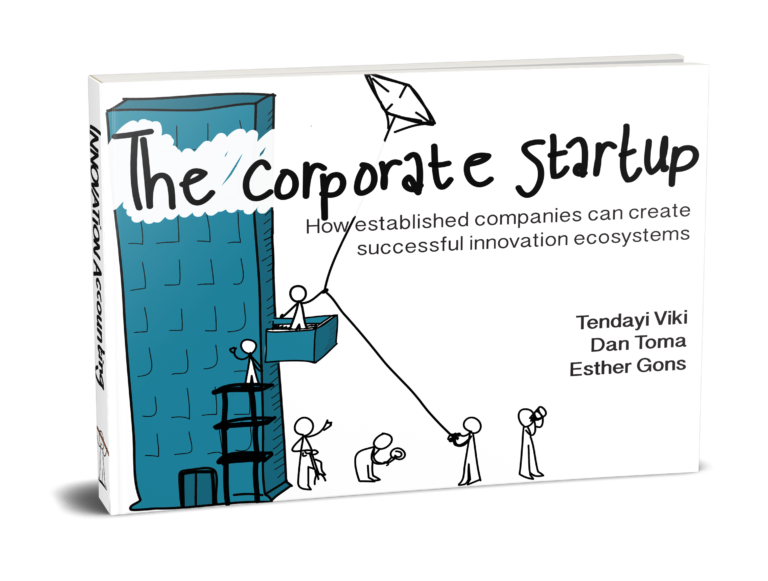
Winner of the 2019 Golden Axiom Business Book Award 2018 Management Book Of The Year Award.
There is now more pressure on established companies to innovate. The challenge most companies face is how to develop new products for new markets, while managing their core business at the same time. Our approach will help companies to innovate like startups, without having to act like startups. We go beyond running just another internal accelerator. We help you build successful internal innovation programs that leave lasting value.
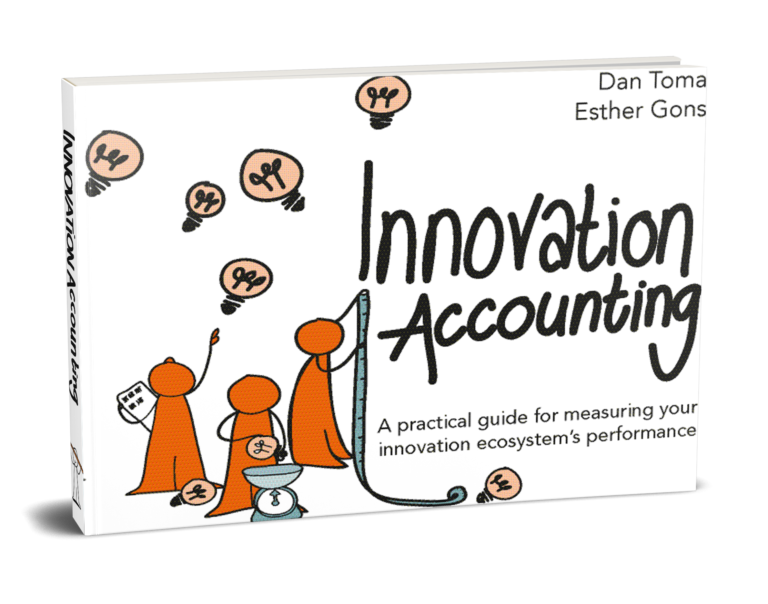
When a company is committed to growing through innovation – not just exploiting the existing business models – standard accounting documents offer insufficient and, often times. irrelevant data.
The book provides tools, frameworks,templates, and visualisations that can be easily understood and applied. Innovation Accounting is an essential go-to book for anyone that wants to measure their company’s innovation ecosystem.
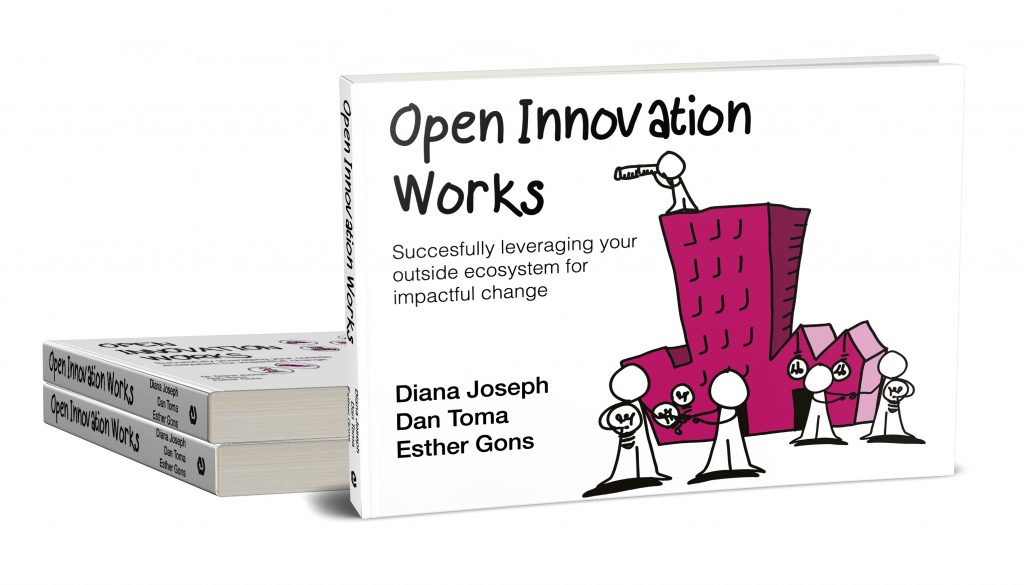
As a corporate leader, you know better than most that innovation is a business imperative, and you can’t do it completely in-house due to structural constraints. How to proceed? The answer is open innovation — partnering with outside entities like universities, government agencies, peer firms, and startups. But there are so many limits, mysteries and tradeoffs!
The Open Innovation Works book is designed to demystify the world of open innovation and help you get the most out of your innovation spend — through frameworks, hands-on templates, case studies and the right day-to-day practices.
how i help
Most of my work happens in conversations with leaders and experts who are trying to make sense of something complex.
Sometimes that’s an innovation program that isn’t working as expected.
Sometimes it’s a new initiative that doesn’t fit existing structures.
And sometimes it’s someone with years of experience who wants to turn their thinking into a clear model or book.
I usually help in three ways.
1. Sparring for leaders.
I work with innovation leaders, founders and senior teams who need a thinking partner when navigating complex challenges.
Typical topics include:
• redesigning innovation governance
• separating exploration from execution
• structuring new initiatives or venture building efforts
• decision making in uncertain environments
• clarifying strategy and next steps
Often a few focused conversations are enough to unlock clarity and direction.
2. Structuring complex ideas
Many people have deep expertise but struggle to translate it into something clear and usable.
I help structure complex thinking into:
• frameworks and models
• practical tools or handbooks
• governance structures
• books or written work
• visual explanations of systems
The goal is always the same: turning complexity into something practical.
3. Occasional advisory projects
For some organizations or initiatives I work more closely for a period of time, helping design or rethink how innovation and exploration are structured.
This can include:
• governance design
• decision frameworks
• portfolio thinking
• structuring venture building efforts
Most innovation problems are not creativity problems, they are system design problems.
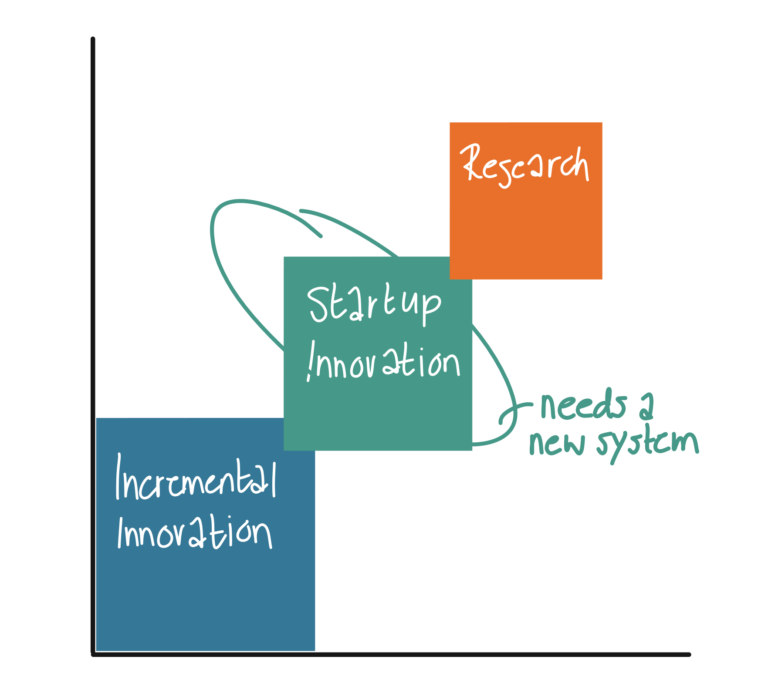
If you want to allow innovation to blossom in your company, you need a separate corprate governance system to support it. This will allow you to search for new business models in a company that is designed to be a high-performing way of executing what you already do, and which is structurally adverse to anything that could disrupt that.

An innovation framework provides guiding principles for developing a series of questions that can assess where a product is along its journey. An innovation framework unifies the business, enabling everybody to know and understand what phase each idea or future business model is in while searching for something that works. This then acts as a catalyst for managing and measuring resources and investment decisions.

When looking at the innovation maturity within a company, the existence of different definitions for innovation is an important criterion. The acknowledgment that there are multiple types of innovation and we should treat these types differently. Because we all agree that innovation is no longer to be treated as a ‘catch-all’ phrase.
Copyright Esther Gons 2026